
Some time ago, a 35-year-old man came to see me — brilliantly educated, a successful businessman, one of those whose life consists of nothing but work. Incredibly responsible, demanding of himself and his employees, he considers this the foundation of his success.
By the time he visited me, he had spent a year feeling that apathy was growing with each passing day, that his engagement with new projects was waning. Despite major achievements in business, he took no joy in them — on the contrary, he was sinking ever deeper into depression, utterly unable to understand its causes. Unsettling thoughts of death had begun to flicker.
A thorough medical examination found no physical illnesses. Our psychotherapy was progressing with difficulty. He berated himself for being ineffective. He refused to see any connection between his present state and his past.

Sergei (as I will call him) said he remembered practically nothing about his childhood, and repeated like a mantra that everything had been the same as for everyone else, nothing special: his parents were demanding about his studies, and they themselves worked a great deal. The man had no personal relationships and insisted they were evolutionarily obsolete. A housekeeper easily handled all domestic tasks. A secretary handled the organizational ones. And intimacy? Only rough, and only with strangers — no attachment, no emotion.
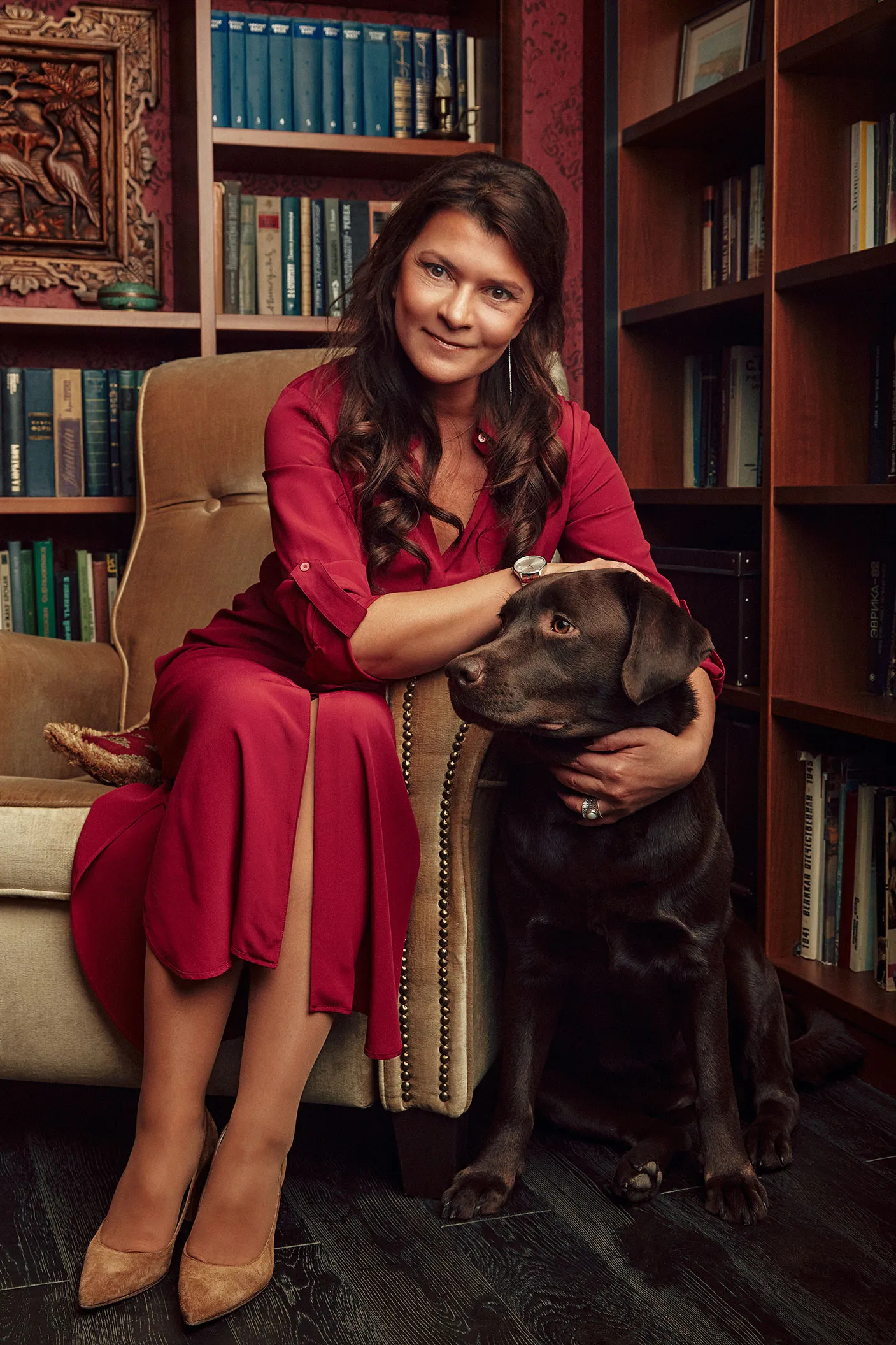
One day he came for a session and saw Zetta, my chocolate Labrador, who was peacefully lying on her mat by the fireplace in my office, as she usually does.
As was her way, Zetta walked up to the man and cheerfully greeted him, wagging her tail. And suddenly he pulled back sharply and curtly asked me to take Zetta out to the waiting room. I did, of course, showing respect for my client's personal boundaries. No one is obliged to tolerate, much less welcome, my dog. When I returned, I noticed that the client was staring off into the distance. His eyes seemed devoid of life — they held no feeling.
I carefully asked him: "You don't like dogs?"
"Dogs are fine! I don't like being touched — all that mushy tenderness! Ugh!" — my client snapped. Ah, at last — emotion. I had long been developing a hypothesis about violence hidden in this man's unconscious. I understood that someone had once touched him roughly, or beaten him outright, thereby violating the inviolability of his body and desecrating physical tenderness itself.

My intuition fired. The moment had come to go all in. Looking him straight in the eye, I asked directly: "Sergei, were you beaten as a child?" His brain did not have time to activate its habitual defenses. Tears welled up. "Yes. It was a tool of discipline," he answered.
"Who did it?" — "My father. With a stick. And my mother supported him," the man replied in a trembling voice. "Did you cry then?" I asked gently. "No. Dad would have said I'm not a man," my client reported dryly. "Crying from pain is completely natural for both men and women. Especially for children when they are unfairly and cruelly hurt," I said.
That session became a turning point. Zetta's touch, my careful but direct questions, had cracked open unexpectedly painful memories in this strong person. He had diligently repressed childhood traumas for years. His parents, as it turned out, punished him with beatings even for getting a B instead of an A.
Of course he became a perfectionist — it helped him survive back then, and he unconsciously carried that strategy into his adult life. This man wanted neither emotional closeness nor tender touch from anyone. He had shut himself off and stopped trusting anyone at all. And there lay the root cause of his depression.

Our need for love, for emotional and physical closeness, does not disappear even when we are unaware of it because of traumas inflicted on us in childhood. Left unfulfilled for many years, it drains our energy and ultimately robs our life of meaning.
When he found himself in my office again, he did not chase Zetta away when she gently rested her muzzle on his knees. He simply froze and sat motionless for several seconds. Then he lightly stroked her head in farewell. The next time, he noticed she was absent. And it was obvious he was worried — could she be ill?
Session by session, their relationship grew more open and warm. He began to feel tenderness from touching Zetta and even recalled that at the age of three he had dreamed of having a dog, only to receive a firm refusal from his parents. I watched his soul and body "thaw." Therapy moved forward with great momentum. Zetta became an inseparable part of it.

And six months later, my client told me that for the first time in his life he had a girlfriend toward whom he felt trust and tenderness. A miracle had come to pass. Zetta and psychotherapy had given a human being the capacity to trust and to love.